


Quality Control
We ensure that every batch of steel coils from the steel plant to the processing plant is processed according to the customer's needs, and each batch of steel coils and plates corresponds to the corresponding quality assurance certificate and furnace batch number.
Rich Experience
Our company has rich import and export experience and a professional team, which can provide products with quality assurance, focus on maintaining and developing customer relationships, and improve customer satisfaction.
Global Shipping
The product sales cover Chinese Mainland, Southeast Asia, the Middle East, the Americas, Europe and other regions. The quality assurance of heavy infrastructure projects for the supply of products such as plates, profiles and pipes is very good, and the customer feedback is very good.
One-stop Solution
Our company uses advanced information technology to provide customers with high-quality services throughout the entire supply chain, including technical consulting, product ordering, production progress inquiry, warehousing and logistics, financial settlement, and after-sales service.
What Is Valve
A valve is a device or natural object that regulates, directs or controls the flow of a fluid (gases, liquids, fluidized solids, or slurries) by opening, closing, or partially obstructing various passageways. Valves are technically fittings, but are usually discussed as a separate category. In an open valve, fluid flows in a direction from higher pressure to lower pressure.
Common Types of Valves
Predominantly equipped with quick-acting 90-degree turn handles, these valves use a ball to control flow to provide easy on-off control. Generally accepted by operators to be faster and easier to operate than gate valves.
Using a compact design, the butterfly valve is a quick-acting rotary motion valve ideal for tight spaces thanks to its wafer type design. Butterfly valve bodies are offered in many different configurations.
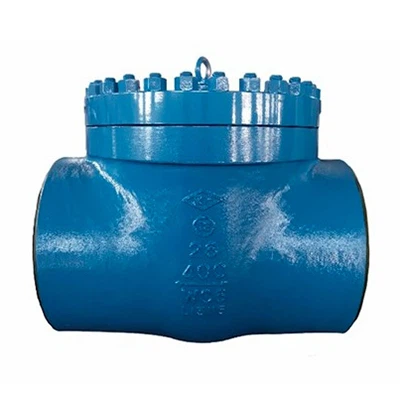
Used to prevent backflow, these valves are typically self-activated allowing the valve automatically opens when media passes through the valve in the intended direction and close should flow reverse.
As one of the most common valve types, gate valves use linear motion to start and stop the flow. These are typically not used for flow regulation. Instead, they used in the fully open or closed positions.
Typically used for controlling flow of media containing solids, the knife gate valve features a thin gate controlled through linear action which can cut through materials and create a seal.
Globe valves are typically applied in modulating control operations. Typically avaialable in three body types, t-body (as shown above), y-pattern, and angle body.
Typically used in small diameter piping systems when fine, accurate flow control is needed, needle valves get their name from the point on a conical disc used within.
Often used for handling solid materials, slurries and liquids with suspended solids, pinch valves use a linear motion. Typically pinch valves feature an internal sleeve to isolate the media.
Using a quick-acting quarter-turn valve handle, these valves control flow using tapered or cylindrical plugs. They provide some of the best ratings when tight shutoff is essential and are reliable in high-pressure or high-temperature environments.
Used to help improve safety, these valves are spring-automated and will help to return a system to the desired pressure during over-pressure events.
Valve Applications
Valves play a large role in most industries. They are used in many parts of daily mechanical devices, including in HVAC and water systems in an office and the gasoline mechanism for an automobile.
This use is an essential aspect of many industries, but there are hundreds of thousands of miles of crucial pipelines that transport media from its source to the place where it will be transformed into its final product. This media could include piping for crude oil and gas, both onshore and offshore.
Valves are used to optimize the pipeline operating conditions, and can be found in the upstream, midstream and downstream section of the piping. Upstream starts at the bottom of the hole in the ground and covers everything on the wellhead up to the choke. In this case, the choke is a specialized globe valve that is mounted on the wellhead to regulate the output of the well.
Midstream starts at the output of the choke and ends at the fence of the final destination (usually a refinery). Downstream is everything inside the area of the destination. The most important factor to consider when selecting a valve for a pipeline application is whether the valve is piggable – that is, the inside is designed to be cleaned or inspected.
The oil and gas industry is a subset of the pipelines category. Due to the high demand for oil and gas, deeper wells, longer pipelines, and lower production costs have become necessary. Along with the need for an inexpensive valve, the device must also be tougher, last longer, and perform better to meet the demands of the industry.
Valve service environments and operating conditions are often extreme with high temperatures (greater than 1,500°F) and high pressure (greater than 25,000 psig) or cryogenic and very low pressure applications. Another feature important to valves used in the oil and gas industry is the capacity for remote control.
The food and beverage industry is a large and growing industry with an increasing need for parts and products that keep plants running smoothly .The industry's many challenges, including safety concerns, have prompted strict material requirements for the valves used in these plants. There are two classifications for valves in the food and beverage industry: those in direct contact with food materials and those handling utility services (i.e. steam, water).
For valves which come into direct contact with food, there are regulations in place (issued by such organizations as the FDA) which require that the inside of the valve be smooth enough to avoid trapping particles or bacterial accumulation. Valves made of a soft material must not absorb or hold any product going through the valve. These standards also specify that there should not be dead volume in the valve or crevices where material can be trapped to avoid decay or stagnate. Valves in the food and beverage industry do not face the high pressures or highly corrosive materials that are present in other industries.
The biopharm industry is part of the larger chemical processing industry. The most important feature of valves used in this industry is their ability to be cleaned and sterilized. The chemical processing industry is responsible for processing raw materials into products. Since chemical processing often involves reactions using pressure and/or heat, and could cause toxic by-products, the media in this industry tends to be highly corrosive and abrasive. The valves need to be able to tolerate the nature of the media, as well as offer precise flow control and high leakage protection to protect against spills and cross-contamination.
Valves play a critical role in the marine industry. As ships become larger and are used more frequently, they require the ability to generate power, treat and manage wastewater and control HVAC, as well as perform their required tasks. The size and application of the ship will determine the different types and number of valves on board. Valves are used to regulate the loading and storage of a ship's power supply, provide water for fire-fighting capabilities, handle and processes wastewater and store any liquid cargo, among many other applications. Any valve that processes sea water must be durable, and all marine valves must be reliable due to lack of resources once out at sea.

Control valves are an essential part of many industrial systems, as they regulate the flow of liquids or gases in various pipelines. By understanding the principles behind control valves, one can better understand their application and ensure optimal system performance.
The first principle is that control valves must maintain a desired flow rate by balancing the pressure drop across them. They also adjust the flow rate automatically depending on certain set parameters such as temperature or pressure.
Another important principle is that control valves differ in terms of materials and shape, so they must be selected based on the needs of the specific system in which they will be used.
Proper maintenance and care should always be taken with control valves to ensure that any issues are identified early and fixed promptly for maximum efficiency.
Valves - Key Takeaways
Valve design: Designing a valve involves understanding fluid dynamics and material science. A valve blueprint includes details about materials, operating conditions, valve size and actuating mechanisms.
Types of valves: Various types of valves serve different purposes in engineering projects, with unique features characterizing each type. These include gate valves, ball valves, globe valves and butterfly valves. Valves can be manually actuated or automatically actuated using hydraulic, pneumatic, or electric energy.
Hydraulic valves: These valves control the flow and direction of hydraulic fluid around a hydraulic system. They are distinctive due to their suitability for handling high-pressure liquid flow. Examples include pressure control valves, flow control valves, and directional control valves.
Valve materials: The materials used in the construction of a valve impact its efficiency, performance, and durability. They can range from metals like iron, steel, bronze, to non-metals like plastics or ceramics. The choice of material depends on the specifics of the valve's intended use.
Valve applications: Valves are used in a variety of sectors such as transport pipelines, aerospace industry, chemical industry, pharmaceutical industry and home applications, due to their ability to control flow rate, pressure, and volume in fluid control systems.
Functions of Valves in Industrial Settings
Flow regulation
Valves serve as effective tools for adjusting the rate of fluid or gas flow within a system. By opening or closing the valve, operators can control the volume of material passing through, facilitating precise regulation and optimization of industrial processes.
Isolation
Valves play a crucial role in isolating specific sections of a pipeline or system. This function is essential for maintenance, repairs, or when it's necessary to halt the flow in a particular part of the system without affecting the entire operation.
Pressure control
Maintaining optimal pressure levels is critical in many industrial applications. Valves can be employed to control and stabilize pressure within a system, preventing potential damage to equipment and ensuring consistent performance.
Directional control
In systems with complex configurations, valves are utilized to direct the flow of fluids or gases in specific directions. This directional control is vital for steering the material through different paths, enhancing the versatility of industrial machinery.
Valve Opening Methods Explained
How a valve opens and closes will not only impact the overall performance but also determine how much control you have over the flow and how quickly the valve can operate.
Most valves fit into one of three categories:
● Multi-turn valves: Think of these valves like a screw or piston. You crank the handle and the plug, plate, membrane, or other controlling obstruction moves into the path of the pipe blocking access. Depending on the valve, these can have higher or lower differentials allowing you to open or close them at various speeds.
● Quarter turn valves: Quarter-turn valves offer a full range of motion in a 90-degree turn of the handle. This makes them ideal for situations where precision isn't as important as rapid action and easy opening or closing.
On top of the mechanical motion involved with a valve, also consider the method of actuation. In most cases, valves fall into one of three categories:
● Manual valves: Typically adjusted by hand, these valves use handwheels, hand levels, gear wheels, or chains to actuate.
● Actuated valves: Often connected to electric motors, air or pneumatic systems, hydraulic systems, or solenoids, these valves allow remote control and automation for high-precision or large-scale applications.
● Automatic valves: Some valves activate when a specific flow condition is met. Examples include check valves closing during backflow or pressure release valves activating when an over-pressure condition is detected.
Our Factory
Suzhou Leyihua Electromechanical Co., Ltd
Is located at 126 Hexing South Road, Jinfeng Town, Zhangjiagang City, Suzhou City. With a registered capital of 5 million yuan, the company mainly supplies well-known steel mills such as Yonggang, Zhongtian, Nangang, Xinyu, Xianggang, Xingcheng, Shagang, Rizhao, Masteel, Tanggang, etc., including hot-rolled coils, medium plates, container plates, I-beams, angle steels, channel steels, H-beams, galvanized pipes, welded pipes, square pipes, threaded steel, stainless steel and other spot products. Our company uses advanced information technology to provide customers with high-quality services throughout the entire supply chain, including technical consulting, product ordering, production progress inquiry, warehousing and logistics, financial settlement, and after-sales service.


FAQ