


Profile




Quality Control
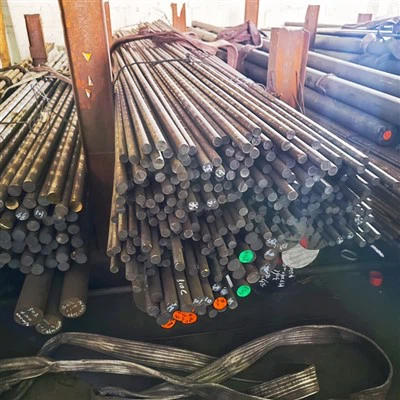
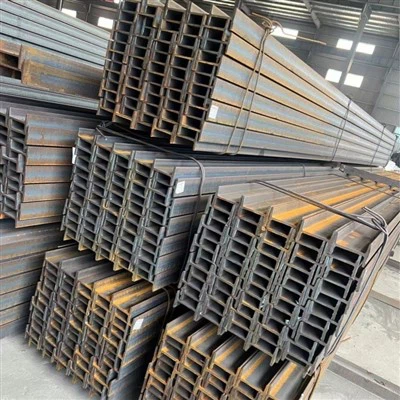
We ensure that every batch of steel coils from the steel plant to the processing plant is processed according to the customer's needs, and each batch of steel coils and plates corresponds to the corresponding quality assurance certificate and furnace batch number.
Rich Experience
Our company has rich import and export experience and a professional team, which can provide products with quality assurance, focus on maintaining and developing customer relationships, and improve customer satisfaction.
Global Shipping
The product sales cover Chinese Mainland, Southeast Asia, the Middle East, the Americas, Europe and other regions. The quality assurance of heavy infrastructure projects for the supply of products such as plates, profiles and pipes is very good, and the customer feedback is very good.
One-stop Solution
Our company uses advanced information technology to provide customers with high-quality services throughout the entire supply chain, including technical consulting, product ordering, production progress inquiry, warehousing and logistics, financial settlement, and after-sales service.
What Is Steel Profile
Steel profiles are steel products which have been rolled, drawn or pressed into a shape which is of the same cross-section over its entire length.
Steel profiles, also known as steel sections or structural steel profiles, refer to specific shapes or cross-sectional configurations made from steel. These profiles are commonly used in construction, engineering, and industrial applications for their strength, durability, and versatility. Steel profiles come in various shapes and sizes, each designed to serve specific purposes and provide structural support.
Here are some common types of steel profiles:
● I-Beams (or H-Beams): These profiles have an "I" or "H" shape when viewed in cross-section. They are widely used in building structures, bridges, and heavy machinery due to their high load-bearing capacity and stability.
● Channels: Channel-shaped steel profiles have a C-shaped cross-section with two flanges and a web at the center. They are often used for structural support, framing, and as tracks for sliding doors or suspended ceilings.
● Angles: Angle profiles have an L-shaped cross-section with equal or unequal legs. They are frequently used for corner reinforcement, framework construction, and bracing applications.
● Tubes and Pipes: Steel profiles can also include round, square, or rectangular tubes and pipes. These profiles find use in various industries, such as construction, infrastructure, transportation, and manufacturing, for conveying fluids, structural applications, and mechanical purposes.
● Flat Bars: Flat bars have a rectangular cross-section and are characterized by their width and thickness. They are commonly used for structural components, frames, braces, and supports.
● T-Sections: T-section profiles resemble the letter "T" when viewed in cross-section, with a vertical stem and a horizontal top section. They are employed for structural framework, lintels, and load-bearing purposes.
● Z-Sections: Z-sections have a Z-shaped profile, often serving as purlins or girts in steel buildings and roofing systems. They provide structural support and help distribute loads efficiently.
Applications of Steel Profiles
Steel profiles are used across many sectors and applications, here are just a few.
Construction and architecture
Steel profiles are indispensable in modern construction. I-beams support large structures like skyscrapers and bridges, angles reinforce joints, and channels are used in a variety of structural applications.
01
Automotive and transportation
The automotive sector relies on steel profiles for vehicle frames, combining strength with flexibility. Railroads use specialized steel profiles in track construction.
Infrastructure and engineering: From bridges to airports, steel profiles are foundational. Their strength is crucial for supporting large structures in challenging environments.
02
Manufacturing and industrial applications
In factories, steel profiles are integral to machinery, conveyors, and storage systems, offering durability and adaptability.
03
Energy sector
Steel profiles are essential in wind turbines and other renewable energy infrastructure, where they withstand environmental stressors.
04
Art and sculpture
Artists also employ steel profiles, creating durable and visually striking installations and sculptures.
05
Steel Profile Production Technologies
Many projects can use standard structural profiles while others may require a custom profile that is job specific. Within our family of companies, we offer an unmatched array of production technologies that are sure to find a way to produce your required steel profile
Laser welding:
This technology, often referred to as laser fusion, is our most popular and efficient production method. It offers nearly limitless capabilities and design options. We routinely produce standard stainless steel structural shapes and both steel and stainless steel sharp cornered custom profiles by this method.
Hot rolling:
Hot rolled product offerings are available in alloy, steel and stainless steels. This is the most popular and economical method for larger quantities of standard or custom profiles.
Hot extrusion:
This is the newest production method to our platform. This process allows for high design flexibility without sacrificing structural integrity. Steel profiles with complex shapes and geometries are produced by this extrusion method.
Cold drawing:
This process is a precision reduction of cross sections of wire rod or pre-rolled profiles through a series of dies to produce the desired shapes. These are generally very small sections with tight tolerance requirements.
Cold rolling:
Cold rolling is a process where profiles are produced by forming wire rod by a continuous rolling process at ambient temperatures. These are generally small sections with tighter tolerances.
Properties of Steel Profile
Steel profiles have certain characteristics that make them, excellent products for the construction and industrial sectors. Some of them are:
Resistance.
● Excellent mechanical properties.
● Their manufacture requires up to 7 times less energy than aluminum profiles.
● Its 2 main manufacturing components are found abundantly in nature.
● The steel can be reused in its entirety. This type of profiles are mainly used as fastening and anchoring of construction machinery, protection and joining of joints in floors and ceilings, etc. However, they can also have more 'nearby' uses, such as polishing and beautifying the edges of doors and windows. Their versatility means that these profiles can be finished in a variety of ways to suit the customer's requirements:
● Varnishing. Steel profiles can be coated with varnish, which does not give it a distinct odor but does give it a visual appearance: it gives the piece more caliber and texture. In addition to this, you can choose whether you want a glossy or matte finish and it gives a smooth and very soft touch. The purpose of this substance is to protect the material from friction or inclement weather.
● Painting or galvanizing. This surface finish, also known as zinc coating, covers the material with a zinc crucible melted at 450ºC, which gives it anti-corrosive properties and extends its useful life.
● Stainless steel. This is the most resistant finish, which is obtained by mixing the steel part with a minimum of 10 to 12% chromium content by mass. The product must be fused with other metals to obtain this finish (molybdenum, nickel and tungsten).
Steps for Inspecting Steel Profiles


Visual inspection: The first step is visual inspection of the profiles for defects. Look for any cracks or undercuts. These are common defects that can compromise the strength of the bar.
Dimensional checks: Dimensional checks allow geometric measurements and tolerances to be calculated and any deviations of the part from the original CAD drawing to be identified early in the process. Dimensional inspection is a service used both in the early stages of production and at the end of a process.
Corrosion testing: These tests evaluate the corrosion resistance of profiles; methods such as salt spray test, electrochemical corrosion test, and accelerated corrosion test are used. The results of these tests provide vital information on the strength and reliability of steel profiles, enabling the company to make any improvements and ensure the quality of its products.
Ultrasonic testing: Ultrasonic testing (UT) is another nondestructive testing method that uses high-frequency sound waves to detect internal defects. This test is suitable for detecting cracks and incomplete fusion in the weld seam (in case of laser welding).
Spectrometric analysis: This test evaluates the chemical composition of materials by analyzing the spectrum of light emitted by the samples subjected to an energy source and makes it possible to ensure the quality of steel profiles, meet the required specifications for end applications, and monitor the consistency of materials used in production.
Dye Penetrant Testing (DPT): Dye Penetrant Testing (DPT) is a nondestructive testing method that uses a liquid dye to detect surface defects. The dye is applied to the surface of the profile and allowed to penetrate all surface defects. After cleaning the surface, a developer is applied to remove the dye and reveal any defects.
Metallographic analysis: This material analysis technique allows the internal structure of metal samples to be studied through the use of a microscope. Representative samples are observed under the microscope, and the presence of defects or anomalies and the grain of the material are evaluated.
Magnetoscopy: Magnetoscopy or magnetoscopic inspection (MT) is a nondestructive analysis technique that exploits changes in the magnetic field caused by surface or sub-surface discontinuities. This method can only be used on ferromagnetic materials, that is, materials capable of being magnetized.
Magnetic permeability: This nondestructive technique is based on the analysis of changes in magnetic permeability, which allows the magnetic behavior to be accurately assessed.
The Advantages of Steel Profile
There are many advantages of profiling steel used in industrial applications, ranging from precise steel profiles to enhanced productivity in manufacturing processes.
Steel profiles are renowned for their exceptional strength and rigidity. This characteristic allows for the creation of complex structures, including halls, storage racks, bridges, and offshore platforms. Steel's superior load-bearing capacity and resistance to deformation ensure the durability and longevity of such structures, even under heavy loads and high temperatures.
Steel profile techniques significantly enhance project efficiency. By utilising advanced cutting machines and automated processes, profiling enables faster completion of jobs without compromising quality or accuracy. Quicker turnaround times result in improved project timelines, reduced downtime, and increased productivity.
The use of steel profiles simplifies the design process for engineers and architects. Steel is produced to precise tolerances and consistent strength levels, allowing for accurate calculations and design specifications. The availability of standardised steel sections further streamlines the design process, enabling efficient integration into larger structures.
Structural steel stands out as a cost-effective material compared to other framing alternatives. Its initial cost and long-term benefits make it an economically viable choice. Steel's high strength-to-weight ratio reduces the need for excessive material usage, leading to potential savings in construction costs. Another point worth mentioning is the durability and low maintenance requirements of steel profiles contribute to long-term cost savings.
Steel profile ensures the fabrication of high-quality products with predictable results. Profiles are manufactured off-site under controlled conditions, where rigorous quality checks and inspections take place. This controlled environment minimises the chances of errors and defects, reducing the need for expensive fixes at the job site. The assurance of consistent quality in steel profiles enhances the overall efficiency and reliability of industrial projects.
The steel industry boasts a fully integrated supply chain supported by advanced technologies. This integration enhances productivity by optimising material procurement, fabrication processes, and project management. Automated cutting machines, such as those used in steel profile, enable higher productivity levels and accelerated construction schedules. The combination of advanced technology and streamlined processes ensures efficient project execution.
Safety is paramount in industrial applications, and steel profile offers significant safety advantages. Steel possesses inert and non-reactive properties, minimising health and safety concerns. It can be easily cleaned, reducing the risk of contamination and ensuring a safe working environment. Steel's resistance to corrosion and degradation contributes to the long-term safety and integrity of structures.
Our Factory
Suzhou Leyihua Electromechanical Co., Ltd
Is located at 126 Hexing South Road, Jinfeng Town, Zhangjiagang City, Suzhou City. With a registered capital of 5 million yuan, the company mainly supplies well-known steel mills such as Yonggang, Zhongtian, Nangang, Xinyu, Xianggang, Xingcheng, Shagang, Rizhao, Masteel, Tanggang, etc., including hot-rolled coils, medium plates, container plates, I-beams, angle steels, channel steels, H-beams, galvanized pipes, welded pipes, square pipes, threaded steel, stainless steel and other spot products. Our company uses advanced information technology to provide customers with high-quality services throughout the entire supply chain, including technical consulting, product ordering, production progress inquiry, warehousing and logistics, financial settlement, and after-sales service.


