


National Standard Stop Valve
Why Choose Us?
Quality Control
We ensure that every batch of steel coils from the steel plant to the processing plant is processed according to the customer's needs, and each batch of steel coils and plates corresponds to the corresponding quality assurance certificate and furnace batch number.
Rich Experience
Our company has rich import and export experience and a professional team, which can provide products with quality assurance, focus on maintaining and developing customer relationships, and improve customer satisfaction.
Global Shipping
The product sales cover Chinese Mainland, Southeast Asia, the Middle East, the Americas, Europe and other regions. The quality assurance of heavy infrastructure projects for the supply of products such as plates, profiles and pipes is very good, and the customer feedback is very good.
One-stop Solution
Our company uses advanced information technology to provide customers with high-quality services throughout the entire supply chain, including technical consulting, product ordering, production progress inquiry, warehousing and logistics, financial settlement, and after-sales service.
What Is National Standard Stop Valve
A national standard stop valve, different from ball valve, is a type of valve used for regulating flow in a pipeline, consisting of a movable plug or disc element and a stationary ring seat in a generally spherical body.
National standard stop valves are named for their spherical body shape with the two halves of the body being separated by an internal baffle. This has an opening that forms a seat onto which a movable plug can be screwed in to close (or shut) the valve. The plug is also called a disc. In national standard stop valves, the plug is connected to a stem which is operated by screw action using a handwheel in manual valves. Typically, automated national standard stop valves use smooth stems rather than threaded and are opened and closed by an actuator assembly.

The plug valve of hydrostatic test is installed on the steam pipe of superheater outlet and reheater inlet and outlet of power plant boiler, and serves as the isolation device of static hydrostatic test.

High Performance Regulating Valve
Supcon Control Valve, a leading manufacturer of high-quality control valves based in China.

Low Temperature Shut Off Valve
The range of quality gate, globe and check valves are installed in a wide range of applications in the oil and gas, chemical and petrochemical, onshore and offshore drilling/refining, and the power industries. XHVAL provides more globe vlaves for your unique application.

Large Diameter Butterfly Valve
Large diameter butterfly valves is a high-performance industrial valve designed to control and regulate the flow of various media in large-scale piping systems.

Stainless Steel Motorized Ball Valve
This motorized ball valve offers the control of a solenoid valve without the restrictions of flow or large constant power requirements.

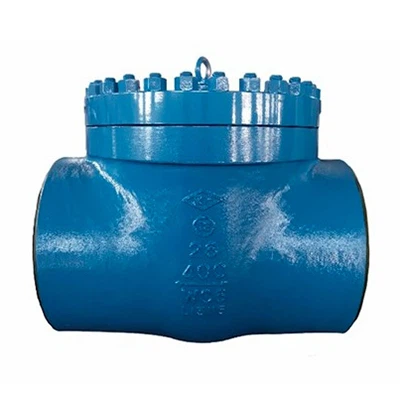
The CV-S0-S is our line of stainless-steel swing check valve. A Swing Check Valve is one of the simplest ways to prevent back flow and is generally inexpensive.

Knife gate valve is also called knife gate valve, knife gate valve, slurry valve, mud valve, and its opening and closing part is the gate. The movement direction of the gate of the knife gate valve is perpendicular to the direction of the fluid, and the medium is cut by a blade-shaped gate that can cut fiber materials.

In the commercial, residential, and industrial sectors, valves have a wide range of uses. There are many significant regulatory groups that offer standards to assure correct performance, interoperability, and user safety because of this broad range of usage of the valves.
Architectural design & planning cepteur sint occaecat cupidatat proident, taken possession of my entire soul, like these sweet mornings of spring which I enjoy with my whole...Architectural design & planning cepteur sint occaecat cupidatat proident, taken possession od my entire soul, like these sweet mornings of spring which I enjoy with my whole
Lorem ipsum dolor sit ament, consectetur adipisicing elit,sed do eiusmod tempor incididunt labore et dolore magna aliqua. it enim ad minim veniam.
National standard stop valves provide good shutoff capability, good throttling capability, high reliability, and a variety of flow configurations.
The national standard stop valve's plug or disc adjusts from fully open to fully closed to match the needed flow rate for a specific application, making them a great choice for precise regulation control. The flow restriction through the valve increases with the distance between the plug and the seat in the body.
Since national standard stop valves find service in partially open configurations, they provide ideal throttling capabilities. Moreover, these valves are easy to maintain and resurface the seats and are specifically designed for throttling operation.
National standard stop valves travel a short distance during operation. Thus, fewer turns are required to fully open and close the plug or the disc. This saves time and wear on the valve parts. In a well-designed national standard stop valve, high reliability ensues.
The glove valve provides three primary body designs (Tee, Angle, and Wye). Each body design provides a different flow path.
Tee is the most common type of national standard stop valve. Angle national standard stop valves can handle the "slugging effect" with its inlet and outlet at a 90° angle allowing fluid to flow in a single 90° turn. Wye valves have a 45° angle between the seat and stem providing a straighter flow path when fully open. This straight flow path translates into the lowest flow resistance among the three designs.
Operating a national standard stop valve may require a bit more effort than a gate or ball valve since the disc inside a national standard stop valve has to be screwed inward/outward to close or open the valve, respectively.To open a national standard stop valve, turn the handwheel anticlockwise, which unscrews the disc and allows the flow of water or liquid through it.
Conversely, to close the national standard stop valve, turn the handwheel clockwise, screwing the disc into the seat and restricting the flow of water.The national standard stop valve design makes them excellent for regulating flow, unlike ball valves or gate valves which mainly act as shut-off valves. This unique aspect earns them a special place in various applications like cooling water systems, fuel oil systems, etc., where the controlling flow is necessary.

Applications of National Standard Stop Valves
National standard stop valves are commonly used in a wide range of industries, including oil and gas, power generation, chemical processing, and water treatment. Some of the most common applications of national standard stop valves include:
Flow regulation
National standard stop valves are used to control the flow of fluids through pipelines, ensuring that the flow rate and pressure are maintained at optimal levels.
Boiler feedwater control
National standard stop valves are commonly used in power plants to regulate the flow of water into boilers, ensuring that the temperature and pressure remain within safe limits.
Process control
National standard stop valves are used in chemical processing plants to control the flow of chemicals and other substances through various stages of the production process.
Water treatment
National standard stop valves are used in water treatment plants to control the flow of water through filters, pumps, and other equipment.
How to Dictate Flow Direction in National Standard Stop Valve
Because of its importance, there is always an indication on a national standard stop valve from its manufacturer, showing the flow direction. The direction of flow is dependent on whether its design is a flow to open or a flow to close.
Flow to open
This is also called standard or forward flow because it is the most common flow direction for national standard stop valves. In this setup, the fluid comes into the valve from under the disc. So it tends to lift it upwards, thus, opening the valve. As a result, this flow direction requires higher closing torque and less opening torque, making it ideal for low-pressure applications. When deploying this system in low-temperature applications, it promotes smooth operation, helps protect the packing, and minimizes erosive action on the disc and seat surfaces. This flow direction helps the disc to fit properly on the seat as the valve closes. This ultimately makes the valve less prone to seat leakage.
Flow to close
Flow to close, which is also referred to as reverse flow, is the less popular flow direction when using a national standard stop valve. In this setup, the fluid comes into the valve from over the disc, which results in a closing action. This flow direction is ideal for high-pressure and high-temperature applications. For high-pressure applications, it helps in maintaining seat sealing and avoiding leakages. The flow direction means the closing torque is less than the opening torque during valve actuation. While in high-temperature service, this configuration ensures that flow diffuses rather than concentrating on the face of the disc. Thereby, it avoids contraction of the stem during cooling. This process tends to lift the disk off the seat, causing leaks. A potential disadvantage of this flow direction is a reduction in the flow capacity of the national standard stop valve.
Flow characteristics
Flow characteristics of any valve refer to the relationship between the flow of the medium and the opening/closing of the valve. When discussing flow characteristics due to only the valve, they are referred to as inherent flow characteristics. But in practice, the entire system flow characteristics include both the valve and pipeline effects and are known as the installed characteristics. Note the inherent characteristics are only valid as long as the pressure difference between the two ends remains constant. For a national standard stop valve, the shape of the disc or plug head determines the inherent flow characteristics. Types include linear, equal percentage, and quick opening.
● Linear: A linear valve flow characteristic means that there is an equal change in flow per unit of valve stroke, irrespective of the disc/plug position.
● Equal percentage: A valve with equal percentage characteristics suggests that a change in flow per unit of valve stroke is directly proportional to the flow occurring just before the change is made. In other words, the relationship between flow and valve stroke is logarithmic. This characteristic is common in process control.
● Quick opening: This characteristic allows valve designs to reach maximum flow quickly, so a small valve stroke has a larger flow increase. Using quick open plugs is ideal for on-off applications.
National Standard Stop Valve Repair Procedure
National standard stop valves may need to be repaired for multiple reasons.
Leakage
National standard stop valves can leak from a number of different places, including the valve stem, bonnet, and packing gland. Leakage may be caused by wear and tear, corrosion, or damage.
Sticking valve stem
A sticking valve stem can prevent the valve from opening or closing properly. This can be caused by corrosion, debris, or misalignment.
Damaged seat or disc
The seat and disc of a national standard stop valve are the two components that seal the valve. If either of these components is damaged, the valve will not seal properly and will leak.
Worn packing gland
Over time, the packing gland can wear out and need to be replaced.
National standard stop valves are designed so that the media flowing through them does not travel in a straight line. Rather than encountering a perpendicular blockage at the valve, the media must take a slight vertical detour up through the valve cavity, where it meets the plug disc. As the valve stem is turned via wheel and raises to allow media through, the disc moves parallel to the flow. The position of the stem tells operators whether the valve is open or closed.
This vertical movement is what enables the national standard stop valve to regulate media flow, rather than simply stopping or starting it. The distance between the disc and the seat determines the flow rate: The farther apart the disc and seat are, the higher the volume of media passing through. National standard stop valves are ideal for throttling, or regulating the flow of media while in a partially open position, and make starting and stopping flow less abrupt which can help prevent water hammer.
Because their design forces media to change direction (horizontal to vertical), national standard stop valves create a high-pressure drop. They are best used in applications that require only unidirectional flow, where massive changes in pressure are not an issue and where safety and leakage are primary concerns. National standard stop valves are often found in piping systems that transport corrosive, viscous, highly pressurized or extremely hot or cold media.
National standard stop valves are clockwise close (anti-clockwise to open).
Do not overtighten on the seat to close. If media is still leaking through the seat may be damaged
Even though they are great for controlling flow try not to leave the disc in the middle of the flow for extended periods of time. This will cause the seat to wear prematurely and in steam applications where continuous throttling is less than 10% open, excessive vibration, noise and wire draw across the seat causing a leak path which at times may not be visual to the naked eye.
Do not exceed 100% of the maximum pressure rating of the valve at any time during its operation. Pressure spikes or fluctuations beyond the valve's pressure rating are solely the responsibility of the operator and can cause considerable harm or even death if not adhered to.
Our Factory
Suzhou Leyihua Electromechanical Co., Ltd
Is located at 126 Hexing South Road, Jinfeng Town, Zhangjiagang City, Suzhou City. With a registered capital of 5 million yuan, the company mainly supplies well-known steel mills such as Yonggang, Zhongtian, Nangang, Xinyu, Xianggang, Xingcheng, Shagang, Rizhao, Masteel, Tanggang, etc., including hot-rolled coils, medium plates, container plates, I-beams, angle steels, channel steels, H-beams, galvanized pipes, welded pipes, square pipes, threaded steel, stainless steel and other spot products. Our company uses advanced information technology to provide customers with high-quality services throughout the entire supply chain, including technical consulting, product ordering, production progress inquiry, warehousing and logistics, financial settlement, and after-sales service.


FAQ
Hot Tags: national standard stop valve, China national standard stop valve manufacturers, suppliers, factory, , Hollow Rectangular Tube, steel pipe
Previous
No InformationYou Might Also Like


Send Inquiry