


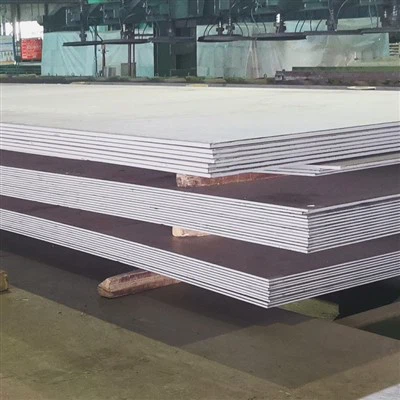
Plate




Quality Control
We ensure that every batch of steel coils from the steel plant to the processing plant is processed according to the customer's needs, and each batch of steel coils and plates corresponds to the corresponding quality assurance certificate and furnace batch number.
Rich Experience
Our company has rich import and export experience and a professional team, which can provide products with quality assurance, focus on maintaining and developing customer relationships, and improve customer satisfaction.
Global Shipping
The product sales cover Chinese Mainland, Southeast Asia, the Middle East, the Americas, Europe and other regions. The quality assurance of heavy infrastructure projects for the supply of products such as plates, profiles and pipes is very good, and the customer feedback is very good.
One-stop Solution
Our company uses advanced information technology to provide customers with high-quality services throughout the entire supply chain, including technical consulting, product ordering, production progress inquiry, warehousing and logistics, financial settlement, and after-sales service.
What Is the Steel Plate
Steel plate is a plate of metal, specifically steel, that can be cut and manufactured into a more elaborate product. Steel plates come in a range of thicknesses, and can be manufactured to a length or width that you need.
High temperature steel is rolled into sheets, where the steel gains strength. Multiple layers of steel are compressed together to create a single piece of steel plate, which can then be cut or burned to the specific size needed. The type of steel created is determined based on the composition of elements used in the molten metal.
When molten metal exits the blast furnace it is continuously cast into billets, and slabs. Billets are commonly used to form bar stock and wire while slabs will be used to produce plate and sheets. Slabs exit the casting process in thicknesses often exceeding 4". In order to make a usable metal sheet or plate, this thickness needs to be reduced.
To reduce and most importantly, to standardize the thickness along the full length of the metal product, the metal is rolled, either hot or cold. If the metal is rolled while it is hot (above its recrystallization temperature) it is called hot rolling. The metal is fed through rollers that gradually reduce the thickness of the metal until it reaches the desired thickness. This thickness can be as little as 11 thousands of an inch.
If the final metal product has thickness above ¼" (6mm) then it is known as metal plate and is part of the structural metal family. Any products thinner than this are considered sheet metal.
Cold rolling is done when the material either needs increased strength, or when very precise thickness is required. The thickness reduction at each pass is lower than hot rolling, so cold rolling takes longer than hot rolling.
9 Major Uses of Steel Plates
Steel plates, also referred to as structural steel, are made up of multiple steel layers that are compressed together to form individual plates. Those individual plates can be welded and cut as necessary, and they offer the strength and durability needed in a variety of applications. Steel plates come in different sizes and grades and are both corrosion and abrasion resistant. Due to variations in their thickness, they are an attractive alternative to steel sheet. They are used widely, for home construction, heavy civil construction, mining, machinery engineering, shipbuilding, for military projects, and in the oil and gas pipelines. More, specifically, here are some of the major uses of steel plates:
Steel plates play a versatile role in the construction industry. They're particularly common in the construction of bridges, building, and warehouses. They're also used for building large commercial structures like airports and sports arenas. Steel plates are used to help make building foundations stronger and to provide foundational support to bridges. They're also an essential component of most pre-fabricated homes, including the new, trendy "tiny houses."
In the heavy civil sector, steel plates are used for road plates, shoring plates, excavation, and more.
Military buildings and vehicles are often fortified with the help of steel plates. They're common in jeeps, tanks, trucks, helicopters, jets, and ships used for military purposes. They're also used to test the strength of weapons and bullets. All branches of the military use steel plates in some fashion.
Easily welded and ultra-strong, steel plates are used in a significant number of ships and are probably one of the most commonly used materials in ship building. They're also a key component of many oil rigs and in offshore construction. Their corrosion resistance makes them ideal for these applications.
Pressure vessels like gas tanks and boilers, which need to protect against leaks and extreme temperatures, are frequently made of steel plates. Oftentimes, these steel plates are specifically engineered to be able to hold gas or fluid contents at different temperatures to reduce the risk of explosion.
Large shipping containers are commonly built using steel plates. Steel plates help preserve the life of these shipping containers due to their corrosion and rust resistance, and they are strong enough to protect all different types of cargo.
In addition to being used for construction of rigs, many oil and gas pipelines use steel plates to maximize their strength and ensure they last longer without corroding. Steel plates can easily be welded to suit the needs of pipelines and can also be used for repair purposes when parts of pipelines need to be patched up.
You probably weren't aware of this, but steel plates are even used to build your household refrigerators and dishwashers. In refrigerators, steel plates are beneficial because they help the appliance hold its temperature and are unlikely to rust even after years and years of use.
Steel plates are found in many cars on the road today. Due to their strength, they're essential in keeping drivers and passengers safe in the event of accidents. They can also be relatively light in weight in comparison to other materials of their strength, which means they help improve the fuel economy of cars.
In addition to being used in almost every other area of construction, steel plates are also used for road work projects. Skid-resistant, steel road plates can be a viable and temporary fix to place over holes and other compromised areas of road to allow road traffic uninterrupted access to those areas during construction projects and road repair projects.
The Benefits of Steel Plate
High strength: Steel plate is a very hard material, its strength far exceeds that of other metal materials. This makes the steel plate have a wide range of applications in various industrial fields, such as construction, bridges, ships, automobile manufacturing and so on.
Good wear resistance: Due to the high hardness of the steel plate, it has good wear resistance. This makes the steel plate perform well in work environments with heavy wear, such as mines, road construction, etc.
Corrosion resistance: Steel plate has good corrosion resistance to most chemical substances, so it has a wide range of applications in chemical, petroleum and other industries.
Easy to process: Steel plates can be easily processed into various shapes and sizes by cutting, welding, bending, etc., so it has a wide range of applications in the manufacturing industry.
Economy: The low cost of steel plate compared to other high-performance metal materials makes it an advantage in projects with limited budgets.
Reusable: Steel plates can be recycled and reused to reduce environmental impact and achieve sustainable development.
Different Steel Plate Typesription
Mild Steel Plates
Mild steel plates are among the most commonly used types of steel plates. They are composed of a low amount of carbon, making them highly malleable and ductile. These properties make mild steel plates easy to work with, as they can easily be cut, welded, and formed into various shapes.
High-strength Low-Alloy Steel Plates (HSLA)
HSLA steel plates are designed to provide better mechanical properties and greater resistance to corrosion than carbon steel. They contain small amounts of alloying elements, which enhance their strength and durability.
Stainless Steel Plates
Stainless steel plates are known for their exceptional resistance to corrosion and staining. They contain chromium, which forms a passive layer on the surface, protecting the steel from oxidation.
Abrasion-Resistant Steel Plates
Abrasion-resistant (AR) steel plates are designed to withstand heavy wear and tear. They are commonly used in industries such as mining, construction, and material handling.
Pressure Vessel Steel Plates
Pressure vessel steel plates fabricate boilers and vessels designed to hold gases or liquids at high pressures.
Tips to Choose the Right Steel Plate
Durability:
When it comes to buying steel plates, or, other steel products durability should be your priority. The steel lends strength and durability to a building. Therefore, when steel is used for a construction project it is expected that the building would be durable. However, while buying steel plates one should be careful about the quality of the steel and also the specific steel properties. Each steel variant such as mild steel, low carbon steel comes with a set of properties. Being aware of that is necessary, also steel is available in different grades, the strength, and durability of the steel would depend on the steel grade as well.
Strength:
When it comes to choosing steel plates, you must look for strength as this is an essential property of steel. The tensile strength of steel is required to make a building strong, and in the manufacturing sector also, steel would make a product durable and strong to withstand pressure. While choosing steel plates that might be used for the flooring, strength should be a priority. These plates should be able to withstand the heavy load that would be put on them. The selection of the steel plates should be based on the strength, and this specific property ensures that the plates would withstand huge load without developing any cracks. In the construction sector the steel is used and it lends this strength to the structure and it will stay strong despite there being heavy pressure or, load.
Weldability:
The weldability of steel is another important criterion that you should never neglect. The weldability of a metal would make it ideal for many operations and applications, if your project requires that the steel plates need to be welded, then it is wise to choose a steel variant that have the weldability property. If the process requires any pre-treatment or, process for getting the metal ready then that might enhance the cost, and that might also be a time-consuming task. However, if the steel plates are weldable then they would be easy to work with, they would be easily customizable, and would be cost-effective choices. Although welding might impact the hardness of the steel and there might be a reduction in the hardness of the metal.
Ductility:
The steel plates must also have ductility, another important property that should not be ignored. The steel plates must have ductility, this would ensure that the plates will be able to withstand load or, pressure without developing any cracks. It would be deformed but would not break and that would make the structure secure and strong. The ductility of steel is again a property that would vary from one steel variant to the other. The composition of each steel variant would be different and the ductility would depend largely on that. Therefore, before choosing your steel plates, you have to pay attention to the variant you are getting.

What Steel Plate Sizes Do You Need
Steel plates are made of steel that is commonly at least one inch thick, though their thickness will depend on the speed of traffic moving over the plate. Thickness options range from under 1" thick to over 3".
Some common sizes for 1-inch-thick steel road plates include: 4×4, 4×6, 4×8, 4×10, 4×12, 4×16, 5×8, 5×10, 5×12, 5×16, 6×8, 6×10, 6×12, 6×16, 8×10, 8×12, 8×16, 8×20.
Steel Plate Size and Weight
It is usually purchased in Thickness x Width x Length units with a minimum thickness of 0.1875" - 0.24". Charges vary in width and length, but the most common steel plate sizes are usually 8ft wide, 12ft long, or 20ft long.
The formula for the estimated weight for a plate order is to multiply the quantity by the volume and density:
Weight = {Thickness (mm) x Width (mm) x Length (mm) x 0.00000785 kg/mm3 } x Number of sheets
Or in pounds and inches
Weight = {[Thickness (in) x Width (in) x Length (in))] x 0.2836 in/lb3 } x Number of sheets
*Note: Steel density 0.2836 in/lb3 ranges from 0.28-0.291 in/lb3. The above is a good weight estimation formula, but the final material weight may vary based on the situation.

Our Factory
Suzhou Leyihua Electromechanical Co., Ltd
Is located at 126 Hexing South Road, Jinfeng Town, Zhangjiagang City, Suzhou City. With a registered capital of 5 million yuan, the company mainly supplies well-known steel mills such as Yonggang, Zhongtian, Nangang, Xinyu, Xianggang, Xingcheng, Shagang, Rizhao, Masteel, Tanggang, etc., including hot-rolled coils, medium plates, container plates, I-beams, angle steels, channel steels, H-beams, galvanized pipes, welded pipes, square pipes, threaded steel, stainless steel and other spot products. Our company uses advanced information technology to provide customers with high-quality services throughout the entire supply chain, including technical consulting, product ordering, production progress inquiry, warehousing and logistics, financial settlement, and after-sales service.


